
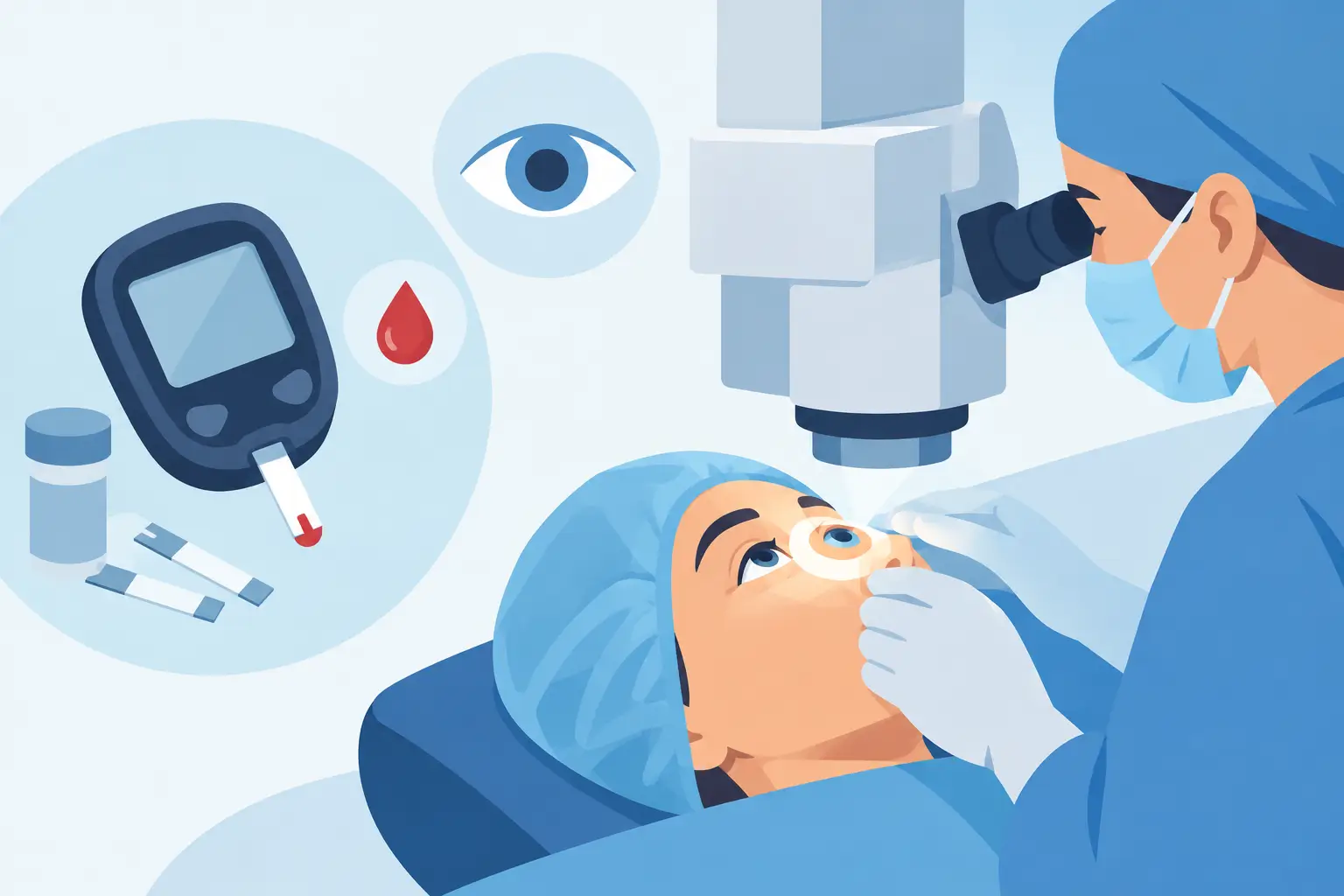
A changing glasses prescription, hazy vision or increasing glare can be frustrating at any age. If you live with diabetes and are considering cataract surgery or lens replacement, you may reasonably ask: can diabetes affect lens surgery? The short answer is yes, but diabetes does not automatically rule treatment out. What matters is how well your diabetes is managed, the health of your retina and cornea, and the findings of a detailed pre-operative eye examination.
For many people with diabetes, lens surgery can be a positive step towards clearer day-to-day vision and less dependence on glasses. It simply requires careful planning, realistic expectations and an experienced eye surgeon who looks beyond the natural lens alone.
How diabetes can affect lens surgery
Diabetes can influence several parts of the eye. The most significant concern is the retina, the light-sensitive layer at the back of the eye. Over time, raised blood glucose can damage its tiny blood vessels, leading to diabetic retinopathy. Some people also develop diabetic macular oedema, where fluid collects in the macula, the central area responsible for detailed vision.
Lens surgery replaces the eye’s cloudy natural lens during cataract surgery, or a clear natural lens during refractive lens exchange (RLE). It cannot remove damage caused by diabetic retinopathy or macular oedema. If these conditions are present, they may limit how sharp vision can become after surgery, even when the operation itself goes smoothly.
Diabetes may also make the eyes more prone to dry-eye symptoms and slower surface healing. In addition, blood glucose that is fluctuating significantly can temporarily alter the eye’s focusing power. This can make a recent glasses prescription less reliable and may affect the accuracy of measurements used to select an intraocular lens.
That is why a reputable clinic will not make decisions based on a prescription alone. Your surgeon needs a clear view of your retina and precise measurements of your cornea, eye length and natural lens.
Cataract surgery and RLE are not always the same decision
A cataract is a clouding of the natural lens. It is common with age and can cause misty vision, glare from headlights, fading colours and difficulty reading in lower light. If a cataract is affecting daily life, surgery may be recommended even for someone with diabetes, provided the eye is suitably stable.
Refractive lens exchange is elective lens surgery, usually chosen to reduce reliance on reading glasses, varifocals or contact lenses. It uses the same core surgical technique as cataract surgery, but the decision is more individual. Where diabetes has caused retinal changes, the potential benefit of RLE must be weighed particularly carefully against the limits those changes may place on visual quality.
This does not mean RLE is unsuitable for every diabetic patient. Someone with stable diabetes, a healthy retina and appropriate measurements may still be a candidate. However, the surgeon may advise against proceeding if there is untreated retinal disease, active macular swelling or uncertainty about the likely visual outcome.
Why retinal screening matters before surgery
A full pre-operative assessment should include more than a standard sight test. Your eye surgeon may use retinal imaging, often including an OCT scan. OCT creates a detailed cross-section of the retina and can reveal subtle swelling or structural changes that may not be obvious from symptoms alone.
If diabetic retinopathy or macular oedema is identified, it may need monitoring or treatment before lens surgery. Depending on the findings, care may involve a retina specialist and treatments such as eye injections or laser therapy. The right order of treatment depends on the individual eye. In some cases, cataract removal improves the surgeon’s view of the retina and supports later treatment; in others, it is better to stabilise retinal disease first.
Good communication between your ophthalmologist, GP or diabetes team is helpful, particularly if your diabetes control has recently changed or you have other health conditions such as high blood pressure or kidney disease.
Can surgery worsen diabetic eye disease?
Any eye operation can cause temporary inflammation. In susceptible eyes, this may contribute to retinal swelling after surgery or make pre-existing diabetic macular oedema harder to manage. The risk is generally higher when retinopathy is more advanced.
Your surgeon may therefore recommend additional retinal monitoring before and after the procedure, and may prescribe anti-inflammatory eye drops for a longer period. This is not a reason to assume the worst. It is a sensible way to protect your result and identify any change early, when it can be addressed.
Blood glucose control: stable is better than perfect
People often ask whether there is a single HbA1c level that makes surgery safe. There is no universal number that applies to every person or every clinic. Your overall health, type of diabetes, daily glucose stability, medication and eye findings all matter.
The practical goal is for diabetes to be reasonably well managed and stable around the time of surgery. Persistently high blood glucose can increase the chance of infection and slower healing, while frequent lows are also unsafe, especially when you are fasting for a procedure. Do not make major changes to insulin or diabetes medication without advice from the clinician who manages it.
Before travelling for treatment, tell the clinic about every medication you take. You should receive clear instructions about fasting, meals and which tablets or injections to take on the day of surgery. This is especially relevant for insulin and newer diabetes medicines that may affect appetite or stomach emptying.
Choosing an intraocular lens when you have diabetes
Lens choice should be guided by your eye health, lifestyle and tolerance for visual trade-offs. A monofocal lens is often chosen for clear distance vision, with reading glasses still needed for close work. It is a dependable option and may be particularly appropriate where retinal health could affect contrast sensitivity.
EDOF, or extended depth-of-focus, lenses can provide a broader range of vision than standard monofocal lenses, usually with less dependence on glasses for intermediate tasks such as a computer screen. Trifocal lenses aim to provide useful distance, intermediate and near vision, but can cause halos or glare around lights, particularly during the neuro-adaptation period.
Premium lens options can be excellent for the right patient, but they are not automatically the best choice. If diabetic retinopathy, macular changes or reduced contrast sensitivity are present, a surgeon may recommend a monofocal or another more conservative option. This is not a compromise in care. It is a recommendation designed around the quality of vision your eye is realistically able to achieve.
Planning lens surgery in Prague
Travelling abroad for eye surgery should never mean rushing the medical assessment. Patients considering treatment in Prague should allow enough time for detailed examinations, the procedure and an early post-operative check before flying home. The exact schedule depends on the clinic, the treatment and your individual findings.
Bring recent information about your diabetes, including medications, HbA1c where available, and any history of diabetic retinopathy treatment. It is also helpful to share previous eye reports or retinal scans. At the consultation, ask directly whether your retina is healthy, what vision outcome is realistic, which lens is recommended and how follow-up will be organised after you return home.
Sandonia supports English-speaking patients through these practical steps, helping them understand their options and prepare for treatment with experienced Czech eye surgeons and modern Prague clinics. A full examination remains the point at which suitability, lens selection and expected results can be confirmed.
Recovery and aftercare
After lens surgery, many patients notice clearer vision within days, although vision can fluctuate while the eye settles. Use your drops exactly as prescribed, avoid rubbing the eye and attend every recommended check-up. Contact the clinic promptly if you develop increasing pain, marked redness, a sudden drop in vision, flashing lights or a curtain-like shadow in your sight.
For people with diabetes, continuing routine diabetic retinal screening after surgery remains essential. Clearer vision after cataract removal can make daily life easier, but it does not replace long-term diabetes care or retinal monitoring.
If you are considering cataract surgery or RLE, request a free suitability assessment and send us your prescription and relevant eye history. A careful assessment can give you a clearer, more reassuring answer than diabetes alone ever could.
This information is for general guidance and does not replace personalised medical advice. Your suitability for lens surgery must be confirmed by a qualified eye surgeon following a full eye examination.