
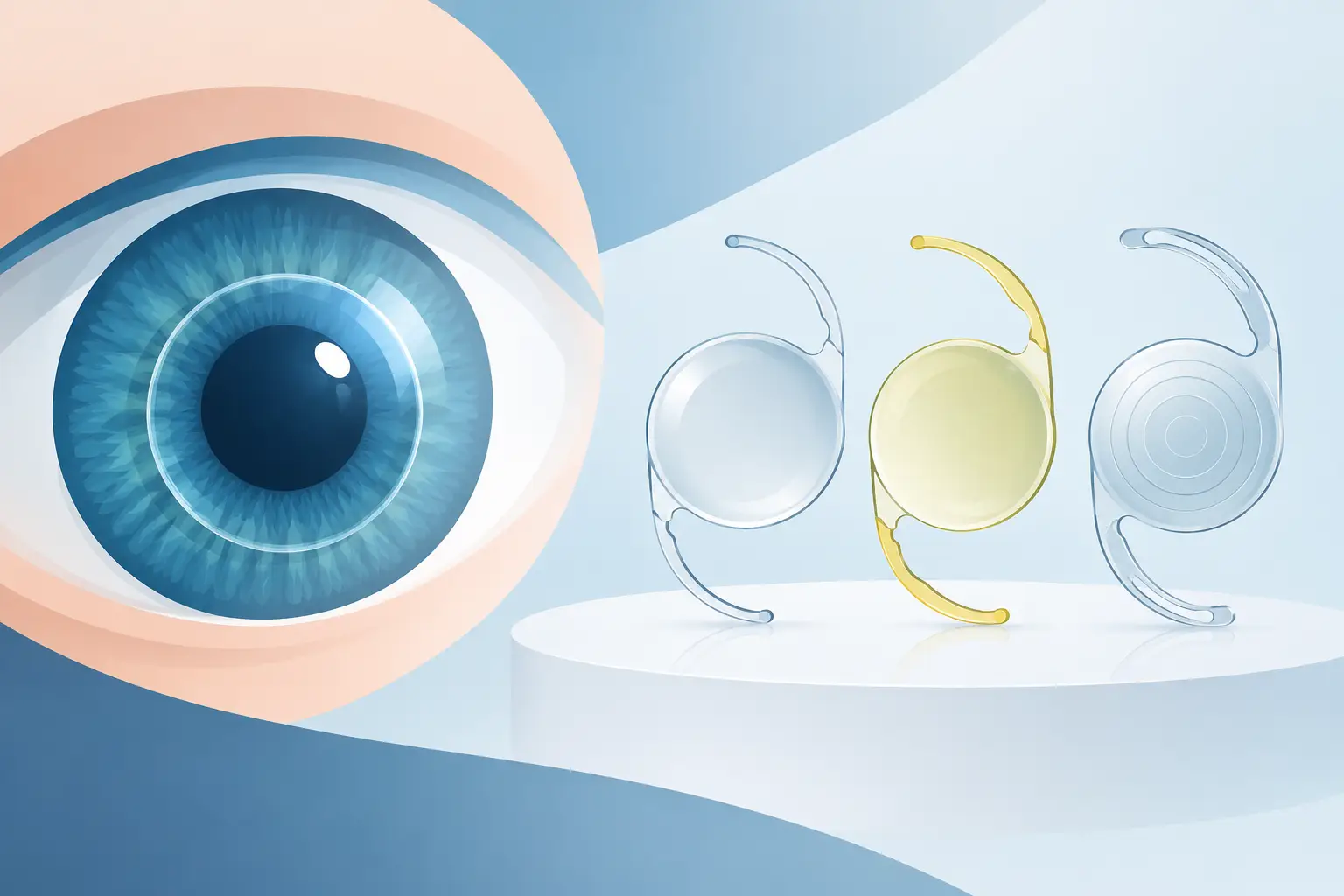
Reading a restaurant menu at arm’s length, changing glasses between the dashboard and a phone screen, or struggling with headlights after dark can make vision feel far more complicated than it used to be. Modern intraocular lens innovations are giving many people considering lens replacement or cataract surgery more choice than ever before, but the best lens is not simply the newest or most expensive one.
The right option depends on your eye health, prescription, daily routine and tolerance for visual effects such as halos around lights. A detailed examination with an experienced eye surgeon is essential, particularly if your aim is to reduce your reliance on glasses for both distance and reading.
What modern intraocular lens innovations can do
An intraocular lens, often called an IOL, is a clear artificial lens placed inside the eye when the natural lens is removed. This happens during cataract surgery, when a cloudy natural lens is replaced, and during refractive lens exchange (RLE), where the natural lens is replaced to correct long-sightedness, short-sightedness, astigmatism or age-related loss of near vision.
For many years, the usual choice was a monofocal lens designed to provide clear sight at one main distance. Modern lens technology has expanded the possibilities. Depending on the lens selected, treatment may improve distance vision, support computer and intermediate vision, or provide a greater range of focus that can reduce the need for reading glasses.
That does not mean every patient should choose a lens with the broadest advertised range. The optical design that suits an avid night driver may differ from the design that suits someone who spends most of their day reading, cooking, using a laptop or enjoying hobbies at close range.
More accurate measurements before surgery
One of the most meaningful advances is not only the lens itself, but the way surgeons plan treatment. Modern clinics use detailed scans to measure the length and shape of the eye, the curvature of the cornea and the natural lens position. These measurements help the surgeon calculate the lens power more precisely.
Corneal topography and tomography can also reveal irregularities on the front surface of the eye. Optical coherence tomography gives a detailed view of the retina and macula at the back of the eye. These checks matter because even an excellent premium lens cannot overcome a retinal condition, significant corneal irregularity or untreated dry eye.
For patients with astigmatism, the surgeon can assess whether a toric IOL is appropriate. A toric lens is designed to correct the uneven corneal curvature that can otherwise blur vision at all distances. It must be carefully aligned during surgery, which is why planning and surgical precision are so important.
The main lens choices in modern eye surgery
Monofocal lenses: dependable clarity at one distance
A monofocal IOL is usually chosen for distance vision, meaning many patients can see television, scenery and everyday walking more clearly without distance glasses. Reading glasses are commonly still needed for books, menus and small print, while computer use may require a separate pair depending on the chosen focus.
Monofocal lenses remain an excellent choice for many people. They generally have a lower likelihood of glare and halos than multifocal designs, which can make them particularly appealing to people who drive frequently at night or who have eye conditions that make premium multifocal optics less suitable. Toric monofocal lenses can also correct astigmatism.
Some patients consider monovision, where one eye is set more for distance and the other for nearer tasks. This can reduce dependence on glasses, but it is not comfortable for everyone. A contact lens trial may sometimes help show whether the brain adapts well to this arrangement.
EDOF lenses: a useful middle ground
Extended depth of focus, or EDOF, lenses aim to create a continuous range of vision rather than sharply separate focal points. They are often designed to provide clear distance and functional intermediate vision, which can be helpful for computers, supermarket shelves, cooking and seeing a car dashboard.
Many EDOF lens patients still use reading glasses for fine print, especially in dim light. That is not a failure of the treatment – it is a realistic feature of the optical trade-off. In return, some EDOF designs may offer fewer visual disturbances than traditional trifocal lenses, although individual experience varies.
EDOF lenses can be an attractive option for people who want more day-to-day freedom from glasses but place high value on night-time driving comfort. The eye examination will help determine whether the cornea, retina and visual needs support this choice.
Trifocal lenses: the broadest spectacle independence
Trifocal IOLs are designed with distance, intermediate and near tasks in mind. For a suitable patient, this can mean greater independence when using a phone, reading a label, working on a laptop and looking across a room.
The compromise is that trifocal optics can cause halos, glare or starbursts around lights, particularly during the early months after surgery. The brain often learns to filter out some of these effects through neuro-adaptation, but the process takes time and not every person adapts in the same way. Fine vision can also be more demanding in poor lighting.
Trifocal lenses may be less suitable for people with certain macular, optic nerve or corneal conditions. A surgeon may recommend a different option even if a patient strongly wants to avoid glasses. That recommendation is about protecting visual quality, not limiting choice.
Lens materials and optical design also matter
Premium IOL discussions are often centred on monofocal, EDOF and trifocal categories, yet smaller design details matter too. Aspheric lenses are shaped to reduce some optical imperfections and can improve contrast sensitivity. Modern lens materials are designed for long-term clarity and biocompatibility within the eye.
Some lenses include blue-light filtering properties, while others use particular edge designs intended to reduce reflections. These features can be relevant, but they should not distract from the bigger clinical questions: how healthy is the eye, what vision does the patient need most, and what trade-offs are acceptable?
A lens is not a consumer gadget to be selected from a brochure. The surgeon’s recommendation should be based on diagnostic findings and a clear conversation about lifestyle. Someone who plays golf, someone who works on spreadsheets, and someone who reads in bed every night may all reasonably make different choices.
Why lens choice matters for RLE and cataract surgery
Cataract surgery is usually performed because the natural lens has become cloudy and affects daily vision. Lens replacement is necessary, but the type of replacement lens can often be tailored to the patient’s priorities.
Refractive lens exchange is different because the natural lens may still be clear. It is commonly considered by people over about 45 who are increasingly dependent on reading glasses, have a high prescription, or are less suitable for laser eye surgery. RLE can correct the existing prescription while also preventing future cataracts in the replaced lens.
Both procedures involve the same fundamental lens replacement technique, but neither is suitable for everyone. Previous eye surgery, glaucoma, retinal disease, dry eye, corneal shape and general health all need careful assessment. Results also depend on healing and the individual eye’s response.
Planning treatment in Prague with confidence
For patients travelling from the UK, Ireland or the USA, Prague offers access to experienced Czech eye surgeons, advanced diagnostic equipment and recognised premium intraocular lens options at a more accessible private cost. In appropriate cases, the overall saving can be substantial compared with private treatment at home, without making lens quality or clinical planning an afterthought.
A well-organised journey should include an initial suitability discussion, review of your prescription or eye history where available, a comprehensive examination in Prague, surgery planning and postoperative checks before you travel home. It is sensible to allow enough time in the city for these appointments and for the surgeon to confirm that early recovery is progressing as expected.
Sandonia provides English-speaking support to help patients understand the practical side of this process, from preparing for examinations to arranging travel timing and knowing what to expect after treatment. Remote follow-up guidance can also be reassuring once you are back home, although any urgent visual symptoms should always be assessed promptly by an eye professional.
Choose the lens for your life, not the label
The most advanced lens is not automatically the best lens for your eyes. Clear distance vision with occasional reading glasses can be a very satisfying outcome for one person, while another may accept some night-time halos for a wider range of unaided vision.
If you are considering lens replacement or cataract surgery abroad, request a free suitability assessment and send your prescription if you have one. A careful discussion of your vision goals, eye health and daily habits is the best starting point for a decision you can feel comfortable with.